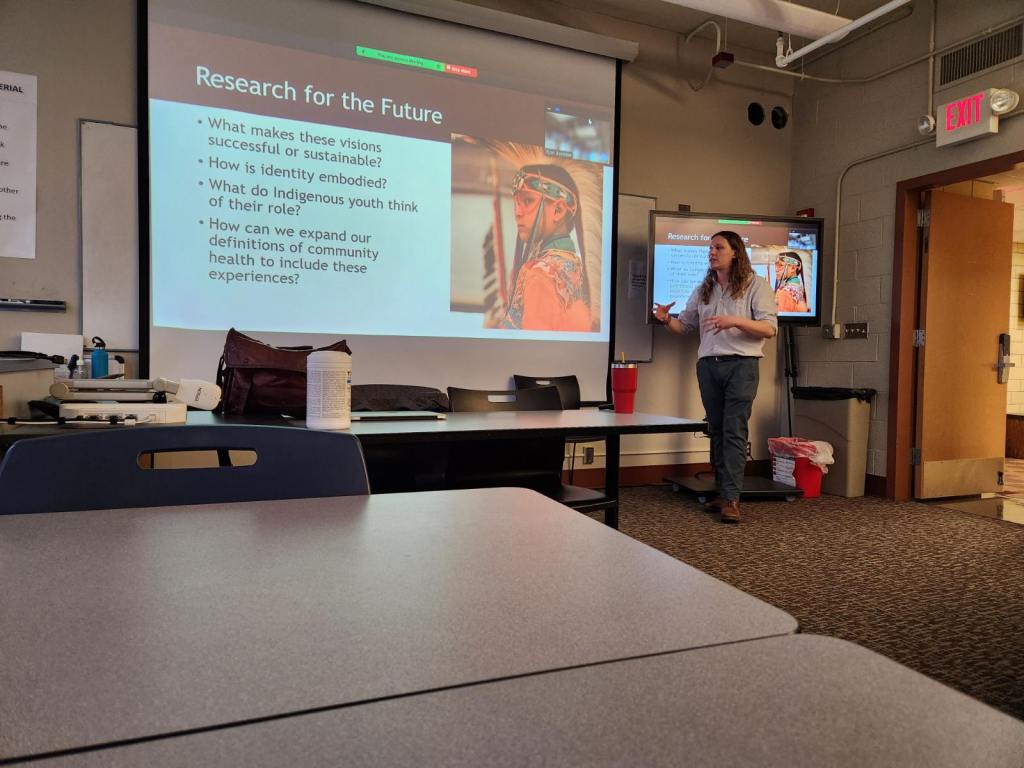
Last week I made my triumphant return to Columbus to defend my dissertation titled, “Being Good Ancestors: Fulfilling Post-Pandemic Futures in Native America.” You can read an abstract of my work below!
American Indian communities were among the most heavily impacted by the COVID-19 pandemic. Even as many begin to treat COVID-19 as an endemic pathogen, Native peoples continue to navigate its far-reaching impacts as the most immediate affront to their physical and cultural lives in a long line of historical and contemporary abuses. To understand response to crises such as the pandemic, anthropologists often rely on the concept of resilience. However, despite a history of its theorization in anthropology and related social sciences, its usefulness as a concept remains hindered by assumptions encouraging overgeneralized and deterministic applications. As some scholars have noted, culturally-specific notions of resilience may clarify the concept while increasing its usefulness among marginalized communities. In response to calls from Native community members, this project sought to understand how resilience was conceptualized among Native peoples in the wake of the pandemic and how this impacted their abilities to move forward. Within a community-based participatory research framework, I conducted an ethnographic project facilitating community conversations, follow-up interviews, and community-led working groups in ten communities across Native America. Participating communities represented both reservation and urban, off-reservation communities in the Great Plains, Great Lakes, and Southeastern regions of the United States. Participants were asked to engage in a community conversation to discuss their pandemic experiences alongside their visions for their communities’ futures with an option to participate in additional follow-up interviews. Further, interested participants organized community-led working groups to address their post-pandemic concerns. The findings from this project suggest that resilience in these communities was not simply a passive ability to weather upheaval. Rather, it represents an iterative process that involves considering responses historically and contemporaneously, and how these responses, ultimately, shape the futures of their communities. The maintenance and sustainability of Native cultural identities drove many of these considerations. Identifying the potential for significant language and cultural loss, mirroring historical and contemporary circumstances, participants gave the utmost priority to cultural identity and practices as they considered their communities’ post-pandemic futures. Throughout this process, participants described multiple barriers to continued resilience in these communities including some predating the pandemic, such as historical trauma, alongside those arising from the pandemic, like lingering social anxieties. Within working group projects and conversations, a sense of community connectedness and sustained sovereignty within Native communities emerged as clear objectives for their futures. These experiences of the pandemic and the resulting visions for post-pandemic futures illustrate the specific temporal scale with which Native community members consider their present circumstances. Instead of reflecting on the most immediate crisis and developing plans to move forward from it, participant experiences detail the retro- and prospective nature of resilience in these communities. While establishing a clearer picture of this dynamic for Native communities, findings from this project illustrate the role of sustained and systemic traumas impacting resilience in many marginalized communities. Furthermore, these findings highlight the necessity of understanding broader definitions of health that incorporate community-level conceptions such as sense of community connection and belonging.
 Ryan Goeckner, PhD, MA
Leave a comment